Do Not Disturb Sign PDF: A Comprehensive Guide
Discover readily available PDF templates for “Do Not Disturb” signs, offering 25+ unique designs for diverse needs – home, work, or meetings!
What is a “Do Not Disturb” Sign and Why Use One?
A Do Not Disturb sign is a visual cue communicating a need for uninterrupted time and privacy. These signs, often available as easily printable PDF templates, politely request others to refrain from knocking or entering.
Utilizing a sign is crucial when focused work, study, relaxation, or important meetings demand concentration. It establishes boundaries, minimizes interruptions, and fosters a respectful environment. A simple sign can significantly enhance productivity and peace of mind.
Types of Do Not Disturb Signs Available in PDF Format
PDF Do Not Disturb signs come in diverse formats. For home use, designs prioritize quiet and privacy, often featuring calming imagery. For office settings, signs emphasize focus and meeting confidentiality, sometimes including “Meeting in Progress” variations.
Templates range from simple text-based signs to more elaborate, graphically designed options. Downloadable PDFs allow easy customization and printing, catering to individual preferences and specific needs, ensuring clear communication.
For Home Use: Quiet Time & Privacy
Home-focused “Do Not Disturb” signs prioritize personal space and uninterrupted relaxation. PDF templates often feature gentle wording like “Quiet Time” or “Please Do Not Knock,” promoting a peaceful atmosphere. These signs are ideal for creating focused study environments or simply enjoying undisturbed personal time.
Designs range from minimalist to decorative, blending seamlessly with home décor while effectively communicating a need for privacy and minimizing interruptions from family or guests.
For Office/Work: Focus & Meetings
Office “Do Not Disturb” signs, often available as PDF downloads, are crucial for maximizing productivity. Templates include phrases like “Meeting in Progress” or “Concentration – Please Do Not Enter,” signaling a need for focused work. These signs minimize interruptions during critical tasks or confidential discussions.
Professionally designed options maintain a workplace aesthetic, clearly communicating boundaries and respecting colleagues’ time and concentration, fostering a more efficient work environment.
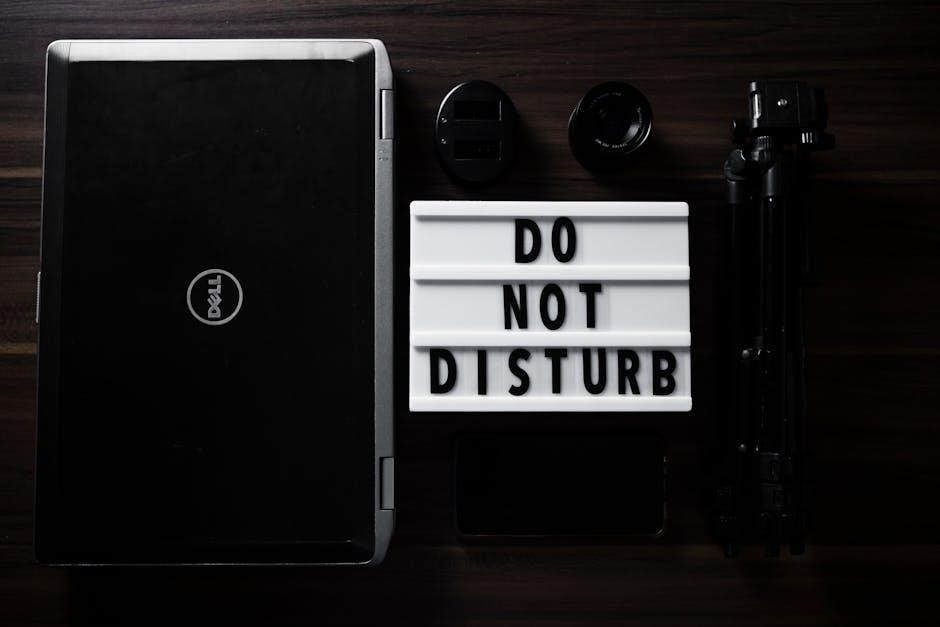
Finding Free Printable Do Not Disturb Sign Templates (PDF)
Numerous websites offer free, printable “Do Not Disturb” sign templates in PDF format; A quick online search reveals a wealth of options, catering to various styles and needs. These resources provide instant access to downloadable signs, eliminating design time and costs.
Simply download the PDF, and print – a convenient solution for immediate use. Popular sites consistently update their offerings with fresh designs and customizable options.
Popular Websites Offering Free Downloads
Several online platforms consistently provide free printable “Do Not Disturb” sign templates. These include dedicated free printable sites and broader resource hubs. Expect to find options on websites specializing in office supplies, home organization, and even educational materials.
Downloading is typically straightforward, often requiring just a click. Always verify the file type is PDF for easy printing and compatibility across devices.
Key Features to Look for in a Printable Template
Prioritize templates offering clear, concise wording – “Do Not Disturb” should be immediately understandable. Look for designs adaptable to your needs; some allow customization with time slots or contact details. PDF format is crucial for universal printing.
Consider visual clarity; bold fonts and simple graphics enhance readability. Ensure the template’s size is appropriate for your intended display location – door, desk, or wall.
Customizing Your Do Not Disturb Sign PDF
Enhance your PDF sign using PDF editors to personalize text – add names, specific timeframes, or urgent notes. Incorporate images or logos for a unique touch. Adjust the sign’s dimensions to fit your space perfectly, ensuring it remains legible.
Experiment with font styles and sizes to maximize impact. Save customized versions for different scenarios, streamlining your communication and maintaining a professional appearance.
Using PDF Editors to Add Text & Images
Utilize PDF editors like Adobe Acrobat or free alternatives to seamlessly integrate text and images. Insert personalized messages, names, or specific instructions directly onto the sign. Add relevant icons or logos to enhance visual communication and clarity.
Experiment with font styles, sizes, and colors for optimal readability. Ensure images are high-resolution for a professional finish, avoiding pixelation upon printing.
Adjusting Sign Size and Format for Printing
Modify the PDF’s dimensions to suit your needs – standard sizes like 8.5×11 inches or smaller, custom formats are possible. Confirm the page orientation (portrait or landscape) aligns with your design. Check printer settings for scaling options, ensuring “actual size” or “fit to page” is selected.
Preview the print layout before finalizing to avoid cropping or distortion. Save a copy with adjusted settings for future use.
Printing Your Do Not Disturb Sign
Select high-quality paper – cardstock offers durability, while standard printer paper is suitable for temporary use. Adjust printer settings for optimal color and resolution. Ensure proper margins are set to prevent clipping during printing. Consider a test print to verify color accuracy and layout before printing multiple copies.
Choose appropriate paper type in printer settings for best results.
Paper Quality and Printer Settings
Opt for cardstock (65-110lb) for a professional, durable sign; standard printer paper (20lb) works for temporary use. Select “Best” or “High” print quality in your printer settings for vibrant colors and sharp text. Ensure margins are correctly set within your PDF editor to avoid cropping. Test print on plain paper first!
Lamination for Durability

Extend the life of your printed “Do Not Disturb” sign with lamination! Choose self-adhesive sheets or a laminating machine for a professional finish. Lamination protects against spills, tears, and frequent handling, making the sign reusable. Consider thicker laminates for high-traffic areas or prolonged use, ensuring longevity.
Specific Use Cases for Do Not Disturb Signs
Employ “Do Not Disturb” signs for focused work from home, minimizing interruptions during crucial tasks. Students benefit from a dedicated study environment, enhancing concentration and academic performance. Prioritize personal relaxation and downtime, safeguarding peaceful moments. Utilize signs during naps, meditation, or simply when needing uninterrupted solitude for wellbeing.
Working From Home: Minimizing Interruptions

Remote workers find “Do Not Disturb” signs invaluable for maintaining productivity. Clearly communicate unavailability to family members during work hours, preventing unnecessary disruptions. Designate specific quiet times, signaling focused periods requiring concentration. Utilize signs during virtual meetings or when tackling complex projects demanding uninterrupted thought. Enhance work-life balance!
Studying & Concentration: Creating a Focused Environment
Students benefit immensely from “Do Not Disturb” signs, establishing dedicated study zones free from distractions. Signal housemates or family members when deep concentration is needed for exams or assignments. Minimize interruptions during online classes or research periods, boosting comprehension. Promote a quiet atmosphere conducive to learning and academic success. Maximize study efficiency!
Relaxation & Personal Time: Protecting Your Peace
Recharge and prioritize self-care with a “Do Not Disturb” sign, clearly communicating your need for uninterrupted downtime. Safeguard moments for reading, meditation, or simply unwinding without intrusions. Establish boundaries to protect personal space and mental wellbeing. Enjoy peaceful solitude, fostering relaxation and reducing stress. Create a sanctuary for rejuvenation!
Do Not Disturb Signs for Meetings ― PDF Templates
Utilize printable “Meeting in Progress” PDF templates to signal focused discussions. Clearly indicate occupied spaces, minimizing disruptions during crucial collaborations. Customize signs with time slots or contact details for urgent matters. Ensure productive sessions by respectfully requesting privacy. Download and print professional-looking signs to enhance meeting efficiency and professionalism.
“Meeting in Progress” Sign Variations
Explore diverse “Meeting in Progress” sign designs, ranging from formal to casual aesthetics. Find templates specifying “Confidential Discussion” or “Quiet Please.” Consider signs with bold, attention-grabbing fonts for maximum visibility. Adapt templates to reflect company branding or meeting themes. Download variations suited to different meeting types and office environments, ensuring clear communication.
Adding Time Slots or Contact Information
Enhance meeting signs by incorporating specific time slots, indicating meeting duration. Include a contact name and extension for urgent inquiries, minimizing disruptions. Utilize PDF editors to easily add text fields for customization. Ensure contact details are accurate and readily visible. This provides a clear point of contact while respecting meeting privacy.
Accessibility Considerations for Do Not Disturb Signs
Prioritize clear, concise language on signs, avoiding jargon. Employ high visual contrast and sufficiently large font sizes for readability. Consider individuals with visual impairments; utilize simple icons alongside text. Ensure signs are positioned at appropriate heights for all users. Inclusive design promotes respect and understanding for everyone’s needs.
Clear and Concise Language

Utilize straightforward phrasing like “Do Not Disturb” or “Meeting in Progress.” Avoid ambiguous terms or overly polite requests that may be misinterpreted. Keep messages brief and to the point, ensuring immediate comprehension. Employ universally understood symbols alongside text for enhanced clarity. Simple language respects everyone’s time and understanding.
Visual Clarity and Font Size

Ensure high contrast between text and background for easy readability. Select a clear, sans-serif font like Arial or Helvetica. Employ a sufficiently large font size – at least 16pt – for visibility from a distance. Avoid decorative fonts or excessive styling that hinders comprehension. Prioritize a clean, uncluttered design for maximum impact.
Alternatives to Traditional Do Not Disturb Signs
Explore digital “Do Not Disturb” statuses on platforms like Slack or Microsoft Teams for virtual communication. Consider direct verbal communication, clearly setting boundaries and expectations with colleagues or family. Utilize calendar blocking to visually indicate unavailable time slots. Employ noise-canceling headphones as a subtle signal for focused work.
Digital “Do Not Disturb” Status (e.g., Slack, Teams)
Leverage integrated “Do Not Disturb” features within communication platforms like Slack and Microsoft Teams. Customize status messages to indicate availability or focus periods. Set automated responses for direct messages during unavailable times. Utilize notification settings to silence alerts without fully disconnecting. Ensure colleagues understand the meaning of the status.
Verbal Communication & Setting Boundaries
Complement physical signs with direct communication about needing uninterrupted time. Clearly articulate availability and preferred methods of contact during focus periods. Establish boundaries with colleagues, family, or housemates regarding interruptions. Proactively discuss expectations to minimize misunderstandings. Reinforce the importance of respecting focused work or personal time.
Legal Considerations (If Applicable)
Investigate local signage regulations, particularly in shared workspaces or public-facing roles. Ensure signs don’t impede emergency access or violate building codes. Consider privacy implications when indicating unavailability; avoid disclosing sensitive information. Comply with any workplace policies regarding communication or interruption protocols. Consult legal counsel if uncertainties arise.
Signage Regulations in Specific Locations
Research local ordinances regarding temporary signage, especially in commercial buildings or shared office spaces. Verify if permits are needed for displaying “Do Not Disturb” signs. Note restrictions on sign size, placement, and content. Confirm accessibility guidelines are met, ensuring signs don’t obstruct pathways or emergency exits. Adhere to property management rules.
Privacy and Notification Requirements
Consider whether displaying a “Do Not Disturb” sign implies a complete expectation of privacy. Ensure individuals understand the sign doesn’t override legal access requirements. Communicate clearly when the sign is in use, especially for scheduled maintenance or deliveries. Respect the privacy of others and avoid overly assertive sign wording. Balance personal needs with communal expectations.

Troubleshooting Common Issues with PDF Signs
If a PDF won’t open, verify Adobe Reader is updated or try another PDF viewer. For printing issues, check printer connectivity and ensure correct paper settings are selected. Distorted prints often result from scaling mismatches; disable “Fit to Page” in print settings. Confirm the PDF isn’t corrupted by re-downloading the template.
PDF Won’t Open or Print
Ensure you have the latest version of Adobe Acrobat Reader installed, as outdated software can cause compatibility issues. Try opening the PDF with a different PDF reader. Verify the file isn’t corrupted by re-downloading it. Check printer connections and default settings if printing fails; a simple restart often resolves these problems.

Sign Appears Distorted After Printing
Confirm your printer settings are correct, specifically scaling options; ensure it’s set to “Actual Size” or 100% to avoid compression. Inspect the PDF itself for embedded fonts that might not be rendering correctly on your system. Try printing from a different application. Adjust margins within the PDF editor before printing.
The Psychology of “Do Not Disturb” Signals
Signals respect boundaries and communicate needs non-verbally, fostering a sense of personal space. A “Do Not Disturb” sign subtly conveys a request for uninterrupted time, minimizing potential conflict. It acknowledges individual preferences for concentration or relaxation, promoting psychological comfort and reducing stress. Effective communication builds trust.
Respecting Personal Space and Boundaries
Utilizing a “Do Not Disturb” sign demonstrates respect for an individual’s need for solitude and focused time. It establishes a clear boundary, signaling unavailability without direct confrontation. This fosters a psychologically safe environment, encouraging productivity and well-being. Acknowledging these boundaries builds trust and strengthens relationships.

Non-Verbal Communication of Needs
A “Do Not Disturb” sign serves as a powerful form of non-verbal communication, conveying a need for uninterrupted time. It bypasses potential awkwardness of direct requests, clearly indicating a desire for focus or privacy. This subtle cue minimizes interruptions, allowing individuals to concentrate without feeling obligated to explain themselves repeatedly.
Future Trends in Do Not Disturb Technology
Expect to see “Do Not Disturb” technology evolve beyond static signs. Smart signs with digital displays could indicate availability and even integrate with scheduling systems. Further, integration with smart home ecosystems promises automated interruption management, adjusting lighting or notifications based on designated “focus time.”
Smart Signs with Digital Displays
Imagine “Do Not Disturb” signs featuring e-ink or LED displays, dynamically showing status – “In a Meeting,” “Focusing,” or custom messages. These smart signs could connect to calendars, automatically updating availability. Remote control via apps allows for easy adjustments, enhancing privacy and minimizing unwanted interruptions effectively.
Integration with Smart Home Systems
Envision “Do Not Disturb” signs seamlessly linked to smart home ecosystems like Alexa or Google Home. Voice commands could activate the sign, triggering “Do Not Disturb” mode across devices – muting notifications, adjusting lighting, and informing family members. This interconnectedness creates a truly responsive and peaceful environment, respecting personal boundaries.