Longboard Size Guide: Finding the Perfect Fit (Updated 04/09/2026)
Navigating the world of longboarding begins with selecting the right size board, crucial for comfort, control, and overall enjoyment. This comprehensive guide, updated today, 04/09/2026, will help you pinpoint the ideal longboard dimensions based on your foot size and preferred riding style.
Understanding the interplay between deck width, length, wheelbase, concave, and flex is paramount. We’ll break down each element, offering tailored recommendations to ensure a perfect fit for beginners and seasoned riders alike.
Proper sizing enhances stability, maneuverability, and responsiveness, ultimately elevating your longboarding experience. Let’s dive into the specifics and find the longboard that suits your unique needs and aspirations.
Consider your shoe size as a starting point, then refine your choice based on riding style, weight, and desired level of control.
Embarking on your longboarding journey requires understanding that one size doesn’t fit all. Longboard sizing isn’t merely about length or width; it’s a holistic consideration of several interconnected factors that influence ride quality and performance. Choosing the correct size is fundamental for safety, control, and maximizing enjoyment.
Foot size serves as a primary starting point, dictating appropriate deck width. As a general guideline, individuals with smaller feet (US sizes 5-6.5) typically benefit from narrower decks (8.5″ and under), while larger feet (US size 12+) often require wider boards (10″ or greater). However, this is just the beginning.
Riding style plays a pivotal role. Cruising and commuting favor longer, more stable boards, while downhill longboarding demands specific length and wheelbase considerations for high-speed control. Freeride and freestyle riders often prioritize maneuverability, influencing deck length and concave choices. Ultimately, finding the perfect fit involves balancing these elements to match your individual preferences and skill level.
Why Longboard Size Matters
The size of your longboard profoundly impacts your riding experience, influencing everything from stability and control to comfort and maneuverability. An improperly sized board can lead to instability, difficulty turning, and increased risk of falls, particularly for beginners. Conversely, a well-matched board enhances confidence and allows you to progress more quickly.
Deck width directly affects foot placement and leverage. Too narrow, and your feet may feel cramped and unstable; too wide, and it can be challenging to apply effective pressure for turns. Length influences stability at speed and the board’s responsiveness. Shorter boards are more agile, while longer boards offer greater stability.
Wheelbase, the distance between the trucks, dictates turning radius and overall responsiveness. Choosing the right size isn’t just about avoiding discomfort; it’s about unlocking your full potential as a longboarder. It’s about finding a board that feels like an extension of your body, allowing you to carve, cruise, and conquer any terrain with confidence.
Understanding Longboard Components & Their Impact on Size
Several key components work in harmony to determine a longboard’s overall feel and performance, each influencing the ideal size for different riders and styles. The deck itself – its width, length, concave, and flex – are primary factors. Wider decks offer more stability, while longer decks provide a smoother ride and increased foot space.
Trucks, specifically their width and angle, affect turning responsiveness. Wider trucks generally offer more stability, while angled trucks allow for tighter turns. Wheels play a crucial role in speed and grip; larger, softer wheels are ideal for cruising, while smaller, harder wheels are preferred for downhill.
The wheelbase, the distance between the trucks, significantly impacts stability and maneuverability. Understanding how these components interact is essential for choosing a longboard that complements your riding style and physical attributes. Each element contributes to the overall size and feel of the board.

Longboard Deck Width & Foot Size
Deck width is fundamentally linked to foot size, impacting control and comfort. Selecting the appropriate width ensures optimal foot placement and a secure, responsive riding experience.
Foot Size & Corresponding Deck Width (US Sizes)
Determining the correct deck width begins with accurately assessing your US shoe size. A properly sized deck provides the necessary platform for comfortable foot positioning and effective control during rides.
Here’s a breakdown of recommended deck widths based on common US shoe sizes: For those wearing sizes 5-6.5, a deck width of 8.5 inches or narrower is generally recommended, offering nimble maneuverability.
Riders with shoe sizes 7-8.5 typically find an 8.5 to 9-inch deck ideal, balancing stability and responsiveness. Individuals with sizes 9-10 should consider a 9 to 9.5-inch width for a comfortable and controlled ride.
For larger feet, sizes 10.5-11.5, a deck width of 9.5 to 10 inches is suggested, providing ample space and support. Finally, those with shoe sizes 12 and above will likely benefit from a deck width of 10 inches or greater, ensuring sufficient room and stability.
5-6.5 US Shoe Size: Deck Width Recommendation
For longboarders with US shoe sizes ranging from 5 to 6.5, a narrower deck width is generally the most suitable choice. This recommendation centers around maximizing control and maneuverability, particularly for beginners or those prioritizing agility.
A deck width of 8.5 inches or less is ideal, allowing for easier foot engagement and quicker turning responses. This narrower platform facilitates tighter turns and a more connected feel with the board.
Consider that smaller feet benefit from a more compact deck, reducing the effort required to shift weight and maintain balance. This setup is particularly well-suited for cruising, carving, and lighter freeride styles.
Experimentation within this range is encouraged, but starting with 8.5 inches provides a solid foundation for developing confidence and technique. Prioritize comfort and a secure foot placement when making your final decision.
7-8.5 US Shoe Size: Deck Width Recommendation
Longboard riders sporting US shoe sizes between 7 and 8.5 typically find an optimal fit within a slightly wider deck range. This accommodates a larger foot size while still maintaining a responsive and controllable riding experience.
We recommend a deck width between 8.5 and 9 inches. This provides ample space for comfortable foot placement and allows for more leverage during turns and maneuvers. It strikes a balance between stability and agility.
This width range is versatile, suitable for various riding styles including cruising, carving, and introductory freeride. It offers a good foundation for progressing skills and exploring different techniques.
Consider your personal preference and riding style when selecting a specific width within this range. A slightly wider deck can enhance stability, while a narrower deck offers increased maneuverability.
9-10 US Shoe Size: Deck Width Recommendation
For longboarders with US shoe sizes ranging from 9 to 10, a slightly wider deck is generally recommended to ensure comfortable foot placement and optimal control. This size range necessitates a board that provides sufficient surface area for secure footing and effective maneuvering.
We suggest a deck width between 9 and 9.5 inches. This offers a sweet spot, balancing stability with responsiveness, allowing for confident carving and controlled turns. It’s a versatile choice for various riding disciplines.
This width is well-suited for cruising, carving, and even some light freeride activities. It provides a stable platform while still allowing for agile movements and quick adjustments.
Ultimately, personal preference plays a role. Riders prioritizing stability might lean towards 9.5 inches, while those favoring maneuverability could opt for 9 inches.
10.5-11.5 US Shoe Size: Deck Width Recommendation
Longboarders sporting US shoe sizes between 10.5 and 11.5 typically require a wider deck to accommodate their larger feet and maintain optimal control. A properly sized deck ensures comfortable foot positioning and prevents unwanted foot slippage during rides.
We recommend a deck width ranging from 9.5 to 10 inches for this shoe size range. This provides ample space for secure footing, allowing for confident carving, pushing, and maneuvering.
This width is particularly beneficial for riders who enjoy cruising, downhill riding, or freeride activities. It offers a stable platform for high-speed runs and precise control during technical maneuvers.
Consider your riding style when making your final decision. Those prioritizing stability may prefer the wider 10-inch option, while those seeking greater responsiveness might lean towards 9.5 inches.
12+ US Shoe Size: Deck Width Recommendation
For longboard enthusiasts with US shoe sizes 12 and above, a wider deck is absolutely essential for a comfortable and controlled riding experience. Larger feet demand more surface area to ensure secure footing and prevent uncomfortable pressure points.
We strongly recommend a deck width of 10 inches or greater for this shoe size. Some riders may even prefer decks exceeding 10.5 inches, depending on their individual foot shape and riding preferences.
This generous width provides ample space for foot movement and allows for confident weight distribution, crucial for stability at higher speeds and during complex maneuvers.
Prioritize a deck that feels stable and allows you to comfortably maintain your stance. Don’t hesitate to experiment with slightly wider options to find the perfect fit for your larger feet and riding style.

Longboard Deck Length & Riding Style
Deck length significantly impacts a longboard’s performance, directly correlating with your chosen riding style. Different disciplines demand varying lengths for optimal control and responsiveness.
Cruising & Commuting: Ideal Deck Lengths
For leisurely cruising and practical commuting, longboard deck lengths typically fall between 33 and 44 inches. This range provides a comfortable platform for relaxed riding and efficient movement across campus or city streets.
Shorter lengths, around 33-36 inches, offer increased maneuverability, making them ideal for navigating crowded areas and executing tighter turns. These boards are often preferred by riders who prioritize agility and responsiveness.
Longer lengths, spanning 38-44 inches, deliver enhanced stability and a smoother ride, particularly beneficial on uneven surfaces. They excel at absorbing vibrations and maintaining control at moderate speeds, making them perfect for longer distances.
Consider your personal preference and typical riding environment when selecting a length within this range. A slightly longer board can provide a more relaxed stance, while a shorter board offers greater freedom of movement.
Downhill Longboarding: Deck Length Considerations
Downhill longboarding demands stability at high speeds, making deck length a critical factor. Generally, longer decks – typically between 38 and 46 inches – are preferred for this discipline. This extended length contributes significantly to increased stability and control during rapid descents.
Longer boards offer a wider platform, allowing for a more stable stance and reducing the risk of speed wobbles. They also provide more leverage for steering and braking, essential for navigating challenging downhill courses.
However, excessively long decks can compromise maneuverability. Riders should strike a balance between stability and responsiveness, considering their skill level and the specific characteristics of the downhill runs they intend to tackle;
Stiffer flex patterns are also crucial for downhill, complementing the longer deck length to maintain control and precision at extreme velocities.
Freeride Longboarding: Deck Length & Maneuverability
Freeride longboarding prioritizes sliding and controlled drifts, requiring a deck length that balances stability with maneuverability. Decks in the 36 to 42-inch range are commonly favored by freeride enthusiasts, offering a sweet spot for performing various tricks and slides.
Shorter lengths within this range enhance responsiveness, allowing for quicker transitions between slides and easier initiation of maneuvers. Conversely, slightly longer decks provide increased stability, particularly when learning new techniques or riding at higher speeds.
Symmetrical shapes are often preferred in freeride, enabling riders to easily switch between regular and switch stances. This versatility is crucial for executing complex combinations and maintaining control during dynamic movements.
Deck flex also plays a role, with medium flex offering a good balance of responsiveness and forgiveness.
Dancing & Freestyle: Longer Deck Lengths Explained
Dancing and freestyle longboarding demand ample deck space for intricate footwork and fluid movements. Boards typically range from 40 to 46 inches or even longer, providing a substantial platform for spins, steps, and creative expressions.
The extended length facilitates walking and dancing on the board, enabling riders to link together a series of maneuvers. A larger surface area also enhances stability during complex footwork, reducing the risk of losing balance.
Slight concave is often preferred, offering a comfortable and secure feel underfoot without hindering movement. Shape is also important; wider decks provide more room for foot placement, while tapered ends can aid in spinning.
Flex is a key consideration, with softer flex allowing for a more responsive and playful ride.

Longboard Wheelbase & Stability
Wheelbase, the distance between the trucks, profoundly impacts a longboard’s stability and responsiveness. It’s a critical factor influencing turning radius and overall ride feel.
What is Wheelbase?
The wheelbase of a longboard refers to the distance between the center of the inner truck mounting holes on the deck. Essentially, it’s the measurement from where the front truck attaches to the deck to where the rear truck attaches. This seemingly simple dimension dramatically influences how a longboard handles and feels while riding.
A longer wheelbase generally translates to increased stability, particularly at higher speeds. This is because a wider truck stance provides a more solid platform and reduces the likelihood of wobbles. Conversely, a shorter wheelbase makes the board more maneuverable and responsive, allowing for quicker turns and tighter carving.
Wheelbase is typically measured in inches and can vary significantly between different longboard models. Understanding your preferred riding style and intended use is crucial when considering the optimal wheelbase for your needs. It’s a key component in achieving the desired balance between stability and agility.
Shorter Wheelbase: Responsiveness & Tight Turns
Longboards featuring a shorter wheelbase excel in responsiveness and the ability to execute tight, controlled turns. This characteristic makes them particularly well-suited for freeride and freestyle disciplines, where quick changes in direction are paramount. The reduced distance between the trucks allows for a more immediate and direct connection to the road surface.
The decreased leverage also makes the board more nimble and easier to manipulate, enabling riders to perform intricate slides and technical maneuvers with greater precision. However, this increased responsiveness comes with a trade-off: reduced stability at higher speeds.
Riders opting for a shorter wheelbase should be prepared for a more engaging and dynamic ride, requiring greater skill and control to maintain stability. It’s an excellent choice for those prioritizing agility and maneuverability over high-speed cruising.
Longer Wheelbase: Stability at High Speeds
A longer wheelbase on a longboard dramatically enhances stability, particularly when riding at higher speeds. This increased distance between the trucks provides a wider platform, resisting unwanted wobbles and offering a more planted feel. This makes longer wheelbase boards a favored choice among downhill longboarders and those prioritizing secure, confident cruising.
The extended wheelbase effectively dampens vibrations and absorbs irregularities in the road surface, contributing to a smoother and more controlled ride. While sacrificing some maneuverability, the trade-off is a significant gain in predictability and stability.
Riders seeking a stable and forgiving platform, especially at speed, will find a longer wheelbase to be ideal. It allows for greater confidence and control, minimizing the risk of speed wobbles and enhancing overall safety.

Adjustable Wheelbase Options
Some longboard decks offer adjustable wheelbase configurations, providing riders with the versatility to fine-tune their board’s performance characteristics. This is typically achieved through multiple sets of truck mounting holes, allowing you to alter the distance between the trucks.
A shorter wheelbase setting prioritizes responsiveness and tighter turning radius, making it suitable for freeride and freestyle disciplines. Conversely, a longer wheelbase setting maximizes stability at higher speeds, ideal for downhill and fast cruising.
Adjustable wheelbase decks are an excellent choice for riders who want to experiment with different setups or those who engage in multiple longboarding styles. They offer a cost-effective way to adapt your board to various terrains and riding preferences without purchasing multiple decks.

Longboard Concave & Foot Lock
Longboard concave, the curvature across the deck, significantly impacts foot grip and control. Different levels of concave cater to varying riding styles and preferences, enhancing foot lock.
Low Concave: Beginner-Friendly & Comfortable
Low concave longboard decks feature a subtle curvature, offering a flat and forgiving platform ideal for beginners and those prioritizing comfort. This minimal contour provides a stable and relaxed riding experience, reducing the learning curve and minimizing foot fatigue during longer sessions.
The gentle shape allows for easy foot adjustments and a more natural stance, making it simpler to maintain balance and control. Low concave is particularly well-suited for cruising, commuting, and carving, where precise footwork isn’t as critical as overall stability and comfort.
Riders who prefer a relaxed and mellow ride will appreciate the forgiving nature of low concave. It’s an excellent choice for those new to longboarding or seeking a comfortable platform for leisurely rides, offering a less aggressive and more accessible experience.
This style promotes a more upright posture, further enhancing comfort and reducing strain.
Medium Concave: Versatile for Various Styles
Medium concave longboard decks strike a balance between stability and control, making them exceptionally versatile for a wide range of riding styles. This moderate curvature offers a noticeable pocket for your feet, enhancing board feel and responsiveness without being overly aggressive.
The subtle contour provides improved leverage for turning and maneuvering, allowing riders to confidently tackle various terrains and techniques. Medium concave is a popular choice for all-around longboarding, seamlessly transitioning between cruising, carving, and light freeride maneuvers.
It’s an excellent option for riders who want a board that can handle multiple disciplines without compromising performance. This level of concave offers a comfortable yet secure platform, suitable for intermediate riders and those seeking a versatile setup.
It provides a good blend of comfort and control for diverse riding preferences.
High Concave: Enhanced Control & Foot Lock
High concave longboard decks feature a pronounced curvature across the width of the board, delivering exceptional foot lock and control for aggressive riding styles. This deep pocketing securely cradles your feet, maximizing leverage and responsiveness during turns and maneuvers.
The significant concave provides an incredibly connected feel, allowing for precise control and confident execution of advanced techniques like slides and technical freeride. It’s a favored choice among downhill longboarders and freeride enthusiasts who demand maximum control at high speeds.
While offering superior control, high concave may require a period of adjustment for riders accustomed to lower concave levels. It’s best suited for experienced riders seeking a highly responsive and locked-in feel.
This design maximizes control and responsiveness for advanced maneuvers.

Longboard Flex & Rider Weight
Longboard flex, ranging from soft to stiff, significantly impacts ride quality and performance, directly correlating with rider weight and intended use; Choosing the correct flex is vital.
Soft Flex: For Lighter Riders & Cruising
Longboards with a soft flex are specifically designed for riders weighing under 150 pounds and prioritize a comfortable, forgiving cruising experience. This flex allows the board to absorb bumps and cracks in the pavement, resulting in a smoother, more enjoyable ride, especially over longer distances.
The increased flexibility makes these boards exceptionally well-suited for mellow cruising, commuting, and carving gentle turns. They offer a more relaxed feel and require less effort to maneuver, making them ideal for beginners or those seeking a laid-back riding style. However, soft flex boards generally lack the stability and responsiveness needed for downhill or aggressive freeride maneuvers.
Riders heavier than 150 pounds may find that a soft flex board bottoms out easily, compromising stability and control. It’s crucial to match the flex to your weight to ensure optimal performance and safety.
Medium Flex: All-Around Performance
A medium flex longboard strikes a balance between responsiveness and comfort, making it a versatile choice for a wide range of riders and riding styles. Typically suitable for individuals between 150 and 200 pounds, these boards offer enough give to absorb some road vibrations while still providing sufficient stiffness for controlled turns and maneuvers.
This flex level excels in cruising, carving, and even light freeride activities. It’s a fantastic option for riders who want a board that can handle various terrains and riding conditions without sacrificing too much stability or control. Medium flex boards are often considered the “jack-of-all-trades” in the longboarding world.
They provide a good starting point for riders unsure of their preferred flex level and offer a solid foundation for progressing in different disciplines.
Stiff Flex: Downhill & Aggressive Riding
Longboards with a stiff flex are engineered for speed, stability, and precision, making them the preferred choice for downhill longboarding and aggressive freeride styles. These boards, typically favored by riders over 200 pounds, minimize unwanted flex during high-speed runs, providing maximum control and responsiveness.
The rigidity allows for confident foot braking and precise steering, essential for navigating steep inclines and maintaining control at exhilarating speeds. Stiff flex decks transmit energy efficiently, enabling quick reactions and powerful maneuvers.
While less forgiving than softer flex options, stiff boards reward experienced riders with unparalleled stability and control. They are not ideal for beginners or casual cruising due to their reduced shock absorption and demanding ride characteristics.

Considering Your Riding Experience
Your skill level significantly impacts longboard selection; beginners benefit from stable setups, while advanced riders explore customized options for peak performance and control.
Beginner Longboard Size Recommendations
For those new to longboarding, prioritizing stability and ease of learning is paramount. A wider deck, generally between 8.5 and 9 inches, provides a more forgiving platform, enhancing balance and control. Deck length should fall within the 36-42 inch range, offering ample space for comfortable foot placement and maneuverability.
Consider a longer wheelbase for increased stability at lower speeds, aiding in building confidence. A mellow concave – low to medium – is also recommended, as it’s more comfortable for beginners and doesn’t require as much effort to engage turns. Flex-wise, a softer flex will absorb bumps and vibrations, creating a smoother, more forgiving ride.
Avoid overly stiff or aggressively concave boards initially; Focus on mastering basic techniques before progressing to more specialized setups. Remember, a stable and comfortable board will accelerate your learning curve and make the experience more enjoyable. Prioritize a setup that inspires confidence and allows you to focus on developing your skills.
Intermediate Rider Size Adjustments
As your skills progress, you can begin refining your longboard setup to match your evolving riding style. Intermediate riders often experiment with narrower deck widths (8.25 – 9.5 inches) for increased responsiveness and tighter turns. Deck length adjustments depend on your preferred discipline; cruisers might stay within the 38-40 inch range, while those exploring freeride may opt for slightly shorter lengths (36-38 inches).
Experimenting with wheelbase is key. A slightly shorter wheelbase can enhance maneuverability, but be mindful of stability at higher speeds. Medium concave levels offer a versatile balance between control and comfort, allowing for more aggressive carving.
Consider a medium flex to accommodate various terrains and riding styles. This provides a blend of responsiveness and shock absorption. Don’t be afraid to try different setups to discover what feels best for you – small adjustments can make a significant difference in performance and enjoyment.
Advanced Rider Customization & Preferences
Advanced longboarders often prioritize highly personalized setups, meticulously tailoring each component to their specific riding style and preferences. Deck width choices range widely, from narrow (7.5-8.5 inches) for technical freeride to wider (9.5+ inches) for downhill stability. Length becomes intensely discipline-specific; downhill boards often exceed 40 inches, while dance boards can reach 46 inches or more.
Wheelbase adjustments are critical for fine-tuning responsiveness and stability. High concave levels (often with radial or W-concave) provide maximum foot lock for aggressive maneuvers. Flex is dictated by rider weight and riding style – stiff flex is standard for downhill, while dynamic flexes are preferred for dancing.
At this level, experimentation is paramount. Advanced riders frequently swap components and adjust setups to optimize performance for specific terrain and tricks, pushing the boundaries of what’s possible.

Where to Find More Information
Expanding your knowledge beyond this guide is highly encouraged! The longboarding community is vibrant and readily shares expertise. Vandem Longboard Shop (vandemlongboardshop.co.uk) offers a detailed size chart correlating foot size with recommended deck widths, a valuable starting point.
Reddit’s r/surfing (www.reddit.com/r/surfing) – while focused on surfing – often contains relevant discussions about board sizing principles. Local longboard shops provide personalized advice and allow you to physically test different setups.
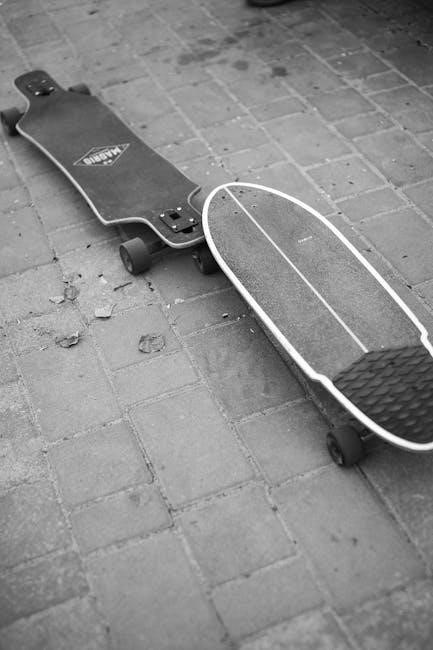
Online forums and YouTube channels dedicated to longboarding are excellent resources. Seek out reviews, tutorials, and discussions to gain insights from experienced riders. Remember to cross-reference information and consider your individual needs.